

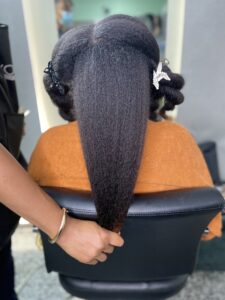
Over time, I’ve spoken about hair routines in different ways, but it’s clear that many people still struggle with knowing what to do, when to do it, and which products to use at the right time. Before diving into products and schedules, the first question you must answer is this: how committed are you?

There is no point creating a routine that demands hours of work when your lifestyle cannot support it. Some people have more time to give than others and that’s perfectly fine. What truly matters is building a regimen that fits your life, your hair, and your level of commitment.
A solid routine is built around four key pillars:
1. Cleanse
Healthy hair starts with a clean scalp. Ideally, invest in two shampoos — a moisturizing sulfate-free shampoo for regular cleansing and a clarifying shampoo for deeper cleansing once a month or every six weeks.
If your hair feels extremely dry, you can also incorporate co-washing using a rinse-out conditioner or co-wash formula. This helps cleanse without stripping moisture. However, co-washing should not replace shampoo entirely; at some point you’ll need a proper cleanse to remove buildup.
2. Condition
Shampoo naturally lifts some moisture from the hair, so it’s important to replace what was lost. Apply a moisturizing deep conditioner for 30 minutes to 1 hour, or 15–20 minutes under heat. Always rinse out with cool water to help seal the cuticles and prevent damage.
Moisturizing Deep Conditioner:
Protein Deep Conditioner:
Protein is needed to strengthen and fortify the hair — especially if you use heat often, colour-treat your hair, or wear protective styles with synthetic extensions. Once a month is a good rule, but adjust as needed. Always follow protein with a moisturizing deep conditioner to restore balance.
Leave-In Conditioner:
This step hydrates, detangles, softens, and prepares the hair for styling. Great ingredients to look for include aloe vera, glycerin, capric triglycerides, and nourishing natural oils.
3. Moisturize
Our hair naturally tends toward dryness, so consistent hydration is key. A good moisturizer should list water as the first ingredient. Choose between liquid moisturizers for quick application or thicker creams if you prefer section-by-section styling.
Seal moisture in with oil or butter depending on your hair type — light oils for fine hair and richer butters for thicker, drier textures. If you use liquid moisturizers, adding a little oil into your spritz bottle can help enhance hydration.
Hydration also starts internally: increasing your water intake does wonders for your hair.
4. Protect
Be gentle when handling your hair, especially during take-down of protective styles. Never comb dry hair. Always work with conditioner and a wide-tooth comb, using fingers first to detangle.
Focus extra attention on your ends — the oldest, most fragile part of your hair. Keep them moisturized and tucked away when possible. Sleep with a satin or silk bonnet/scarf, or use a satin pillowcase to prevent friction and moisture loss.
Protective styles help reduce manipulation, but ensure your hair is hydrated underneath.
Sample Regimen
Weekly Routine:
Sunday – Shampoo, Deep Condition, Leave-In, Moisturize, Protective Style
Monday – Moisturize
Tuesday – Moisturize
Wednesday – Moisturize
Thursday – Moisturize
Friday – Moisturize
Saturday – Take down style and pre-poo ahead of wash day
Monthly:
Protein treatment
This can be tailored to your needs. If your protective style will stay in longer, you may cleanse with a dry shampoo instead of full wash days. If you co-wash more often, you may shampoo once a month. The key is to build a routine that works for you.
Here’s an example of a regimen I used in my wig-wearing era:
Sunday – Shampoo, Deep Condition, ACV rinse, Leave-In, Moisturize, Plait
Monday – Moisturize
Tuesday – Pre-Poo at night
Wednesday – Ayurvedic Deep Conditioner + Co-wash
Thursday – Moisturize
Friday – Moisturize
Saturday – Pre-Poo ahead of wash day
Remember: a regimen is only as effective as your consistency. Your hair will evolve, and your routine should evolve with it.
