
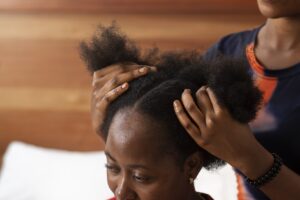
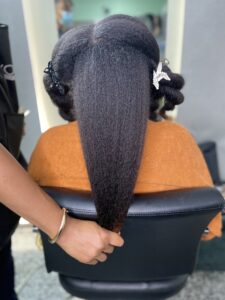
Trimming is one of the most misunderstood parts of natural hair care.
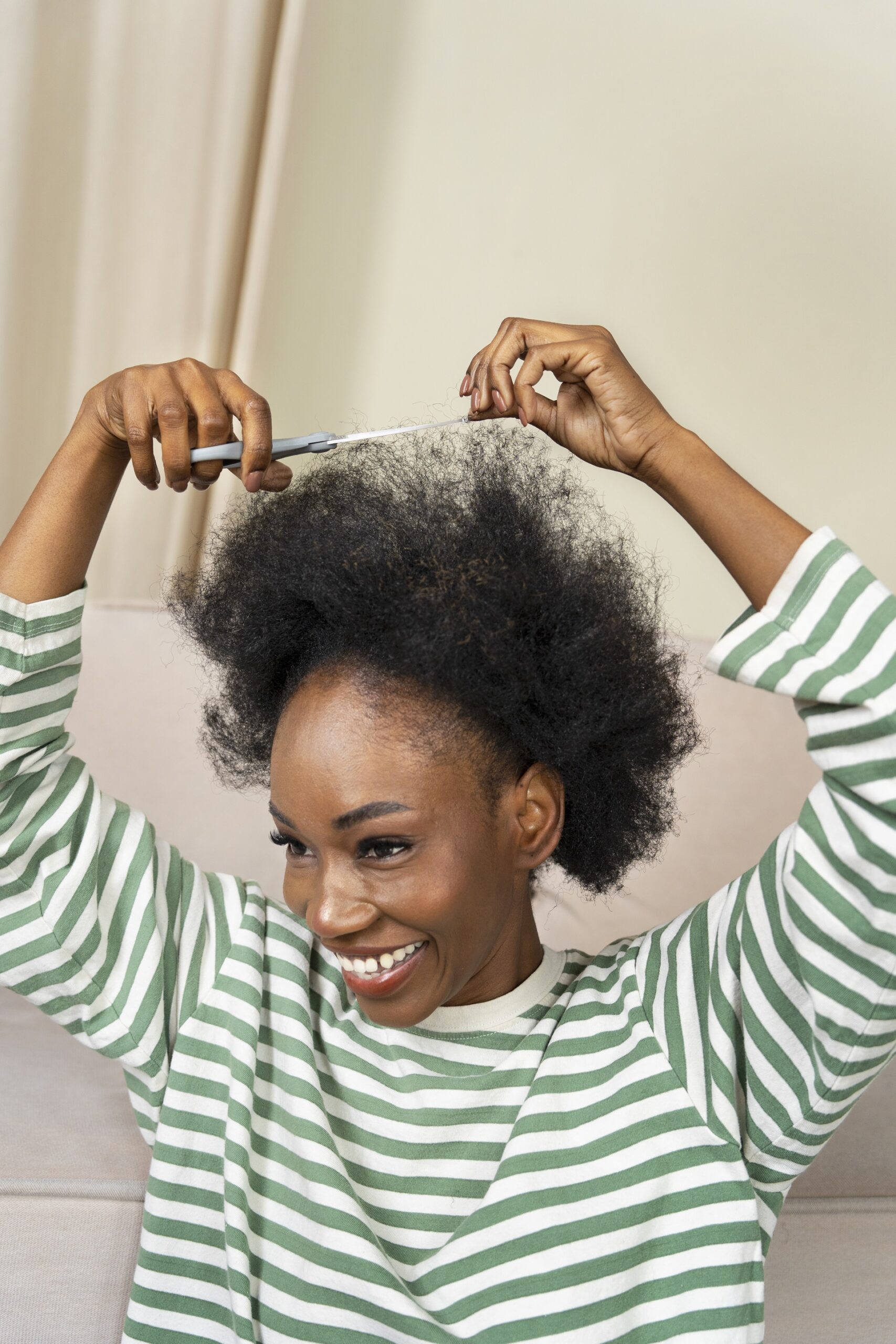
For many people, the idea of cutting their hair, especially after spending months trying to grow it, feels counterproductive. It can seem like every trim sets you back and takes away progress.
But in reality, trims are not the enemy of hair growth. In many cases, they are an important part of maintaining healthier hair over time.
The ends of your hair are the oldest part of each strand. Because they have been exposed the longest, they experience the most wear and tear from daily styling, detangling, friction, dryness, and environmental exposure. Over time, this makes them more prone to splitting, thinning, and breakage.
When those damaged ends are not removed, the splitting can continue further up the strand. This often leads to more breakage, increased tangling, and hair that begins to feel rough, weak, or uneven.
When those damaged ends are not removed, the splitting can continue further up the strand. This often leads to more breakage, increased tangling, and hair that begins to feel rough, weak, or uneven.
Trimming helps prevent that by removing compromised ends before the damage spreads.
Trimming Does Not Affect Hair Growth
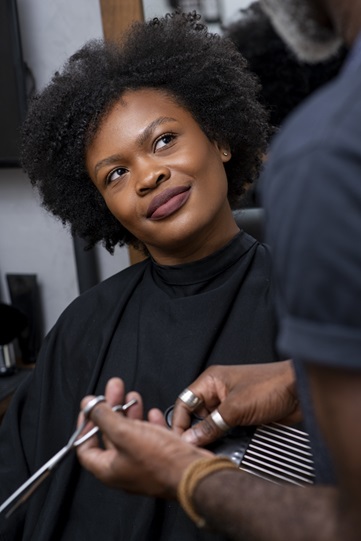
One of the most common myths is that trimming makes hair grow faster or slower.
The truth is that hair grows from the scalp, not the ends. Trimming has no direct effect on your growth rate.
What trims do affect is length retention.
If your hair is constantly breaking at the ends due to damage, you may not see progress even though your hair is growing. Trims help reduce that breakage by removing the weakest part of the strand.
Why Hair Looks Better After a Trim
Freshly trimmed hair often looks noticeably healthier.
That is because the ends appear fuller, neater, and more even. Hair tends to detangle more easily, styles often look more polished, and the hair generally feels better to handle.
Sometimes what people interpret as “hair growth” after a trim is simply their hair looking healthier and more balanced overall.
How to Know When You Need a Trim
There is no one-size-fits-all trimming schedule.
Some people may need trims more often depending on how they style, manipulate, or care for their hair.
Instead of trimming strictly by timeline, it is more helpful to watch for signs such as:
Visible split ends
Thin or see-through ends
Frequent tangling at the ends
Single-strand knots
Difficulty detangling
Hair looking uneven or rough at the ends
Healthy Hair Over Just Long Hair
Length alone does not define healthy hair.
Long hair with damaged, thin, breaking ends is not healthier than shorter hair with strong, full ends.
The real goal is to maintain hair that is healthy from root to tip.
Because sometimes, letting go of a little damaged hair is what allows your hair to thrive in the long run.
