
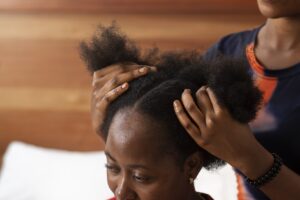
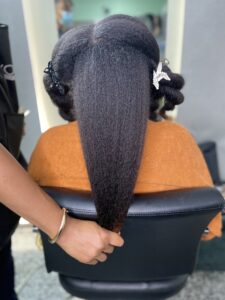
Tangles are one of the most frustrating parts of managing natural hair.
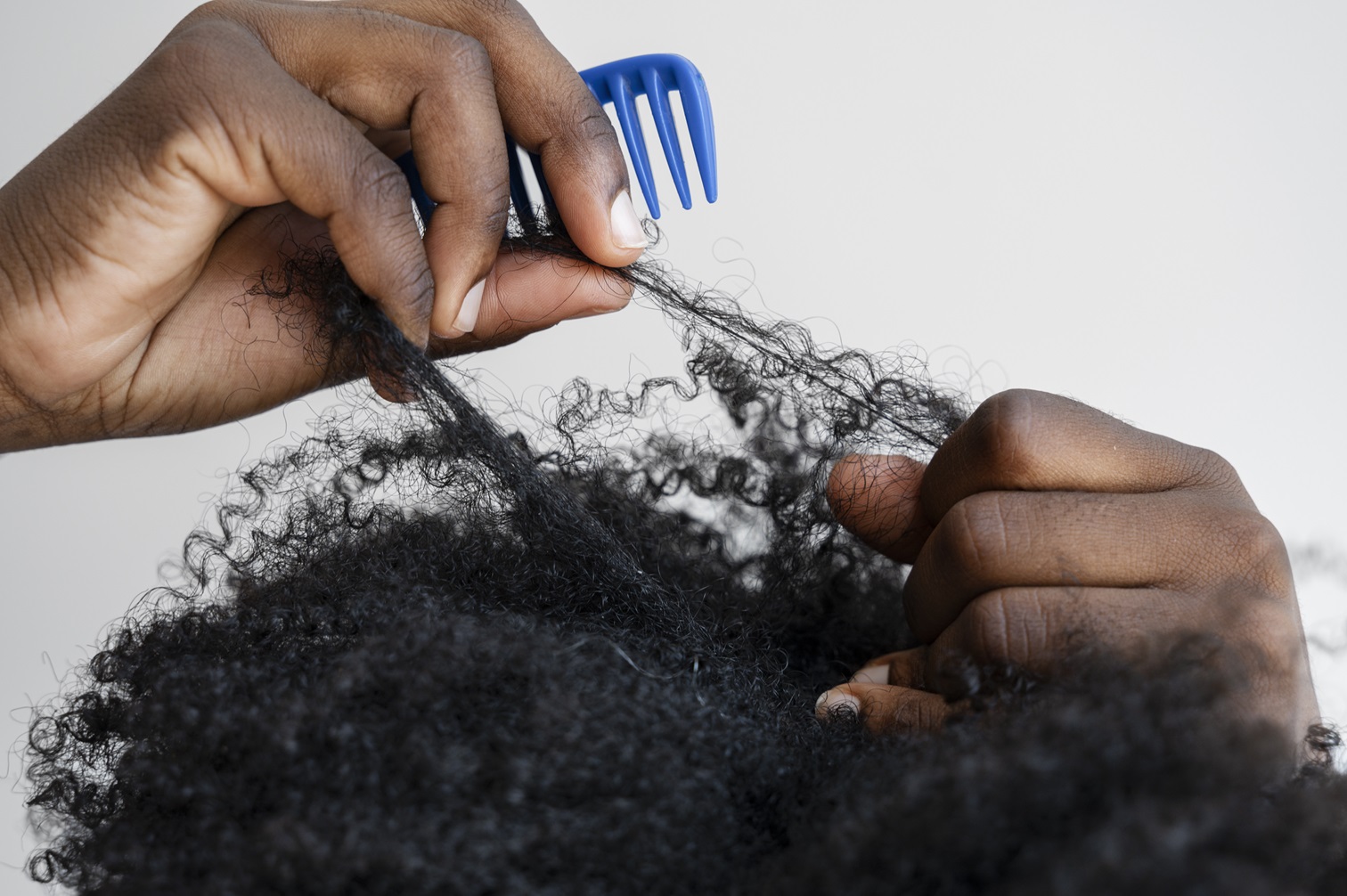
You detangle your hair, and it feels soft and manageable. But after a short time, the knots come back. Wash days become longer, styling feels stressful, and it can seem like your hair is just naturally difficult to manage.
But frequent tangling is usually not random.
It is often a sign that something in your routine needs adjustment.
Dryness Makes Hair More Prone to Tangles
One of the most common causes of tangling is dryness.
When your hair lacks moisture, the strands become rough. Instead of gliding past each other smoothly, they begin to catch and wrap around one another, leading to knots.
This is especially noticeable at the ends, where hair tends to be older and more fragile.
Keeping your hair properly moisturized helps improve smoothness, making it easier to separate strands and reducing the likelihood of tangles.
Your Ends May Need Attention
The ends of your hair play a major role in how easily your hair tangles.
Over time, ends can become dry, split, or uneven. When this happens, they are more likely to knot and tangle, especially during washing or detangling.
If you notice that your tangles are mostly concentrated at the ends, it may be a sign that your hair needs a trim.
Healthy ends make detangling easier and reduce unnecessary breakage.
Detangling Technique Matters More Than You Think
How you detangle your hair can either reduce or increase tangling.
Detangling dry hair, rushing through the process, or using little to no product can cause the strands to snag and knot even more.
Detangling works best when your hair is damp and coated with a product that provides slip, such as a conditioner or leave-in.
Working in sections and starting from the ends before moving upward helps reduce stress on the hair and prevents further tangling.
Wash Day Plays a Role
Your wash routine also affects how much your hair tangles.
Hair that is not properly cleansed may have buildup, which can make it harder for moisture to enter the strands. This often leaves the hair feeling rough and more prone to knots.
Conditioning is just as important. A good conditioner softens the hair and improves manageability, making detangling easier during and after washing.
Leaving Hair Unprotected
When hair is constantly left out, it is more exposed to friction from clothing, weather, and daily handling.
This exposure can lead to shrinkage and tangling, especially for natural hair.
Protective styles or even simple low-manipulation styles can help keep the hair stretched and reduce how often it tangles.
It ComesTangles are not usually caused by one single issue.
They are often the result of dryness, weak ends, detangling habits, and overall maintenance.
The good news is that with consistent care — proper moisture, gentle handling, and attention to your ends — your hair can become easier to manage over time.
Because when your routine supports your hair properly, tangles become less frequent, and managing your hair becomes a lot less stressful.
