
If you’ve been on a natural hair journey for any length of time, you’ve probably experienced this before.
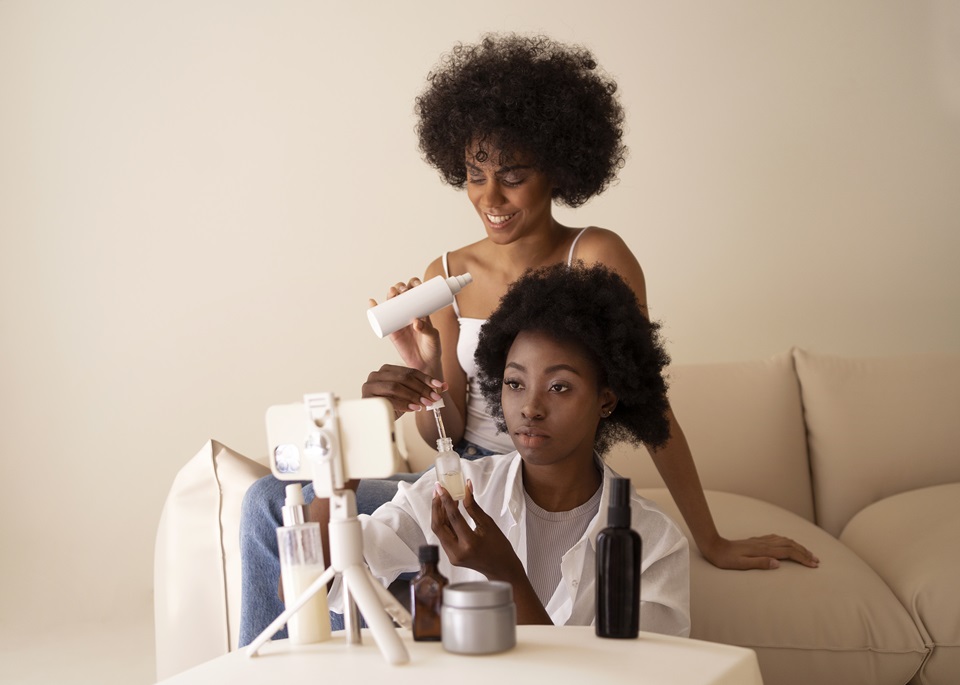
Your hair suddenly feels dry, so you start looking for a new moisturizer.
Your curls aren’t popping the way they used to, so you begin searching for a new styling product.
You notice a little more breakage than usual, and before long you’re adding another treatment to your cart.
It’s a cycle many of us know very well.
The natural hair industry is full of products promising healthier, longer, stronger, and shinier hair. With so many options available, it’s easy to believe that the solution to every hair concern is sitting on a store shelf somewhere.
But the truth is that not every hair problem requires a new product.
Sometimes what your hair needs most isn’t something new. It’s a closer look at your routine.
One of the biggest mistakes people make is assuming that products alone determine the health of their hair. While products can certainly support healthy hair care, they cannot replace good habits.
For example, if your hair is constantly dry because you’re not moisturizing consistently, buying another leave-in conditioner may not solve the issue. If your hair is breaking because you’re detangling too roughly, the most expensive treatment in the world won’t completely fix that problem.
Products work best when they’re supporting a healthy routine, not compensating for an unhealthy one.
Another challenge is product overload.
When people don’t see immediate results, the tendency is often to add more. A new oil gets added to the routine. Then a new cream. Then another treatment. Before long, there are multiple products being layered onto the hair without a clear understanding of what each one is actually doing.
This can sometimes create more problems than solutions.
Excessive product use can lead to buildup, making it harder for moisture to penetrate the hair. Hair may start to feel heavy, dull, greasy, or even dry despite all the products being applied.
Ironically, the solution in these situations is often to simplify, not add more.
A good hair routine doesn’t need to be complicated to be effective.
Many people with healthy, thriving hair follow surprisingly simple routines. They focus on cleansing regularly, maintaining moisture, handling their hair gently, protecting it from unnecessary stress, and being consistent.
Consistency is often more powerful than constantly switching products.
Think about it this way: if you plant a seed and dig it up every week to check if it’s growing, you’re disrupting the very process you’re trying to encourage. Hair care can be similar. Constantly changing products and routines makes it difficult to know what is actually helping your hair.
Your hair also changes over time.
What worked perfectly six months ago may not be exactly what your hair needs today. Weather, lifestyle, styling habits, and even stress can influence how your hair behaves.
That’s why it’s important to learn how to listen to your hair rather than relying solely on trends or product recommendations.
Pay attention to how your hair feels.
Does it stay moisturized?
Does it break easily?
Does it become difficult to manage after certain styles?
These observations often provide more useful information than the latest product review.
This doesn’t mean you should never try new products. Sometimes a new product can genuinely improve your routine. But before reaching for your wallet every time your hair behaves differently, pause and ask yourself a few questions.
Has my routine been consistent?
Have I been moisturizing properly?
Am I handling my hair gently?
Do I have product buildup?
Could the issue be something other than the products I’m using?
Often, the answers are found there.
Healthy hair care is not about owning the most products or trying every new release. It’s about understanding your hair, developing habits that support its health, and being consistent with those habits over time.
Because sometimes the best thing you can add to your routine isn’t another product.
It’s patience, consistency, and a better understanding of your hair.
