

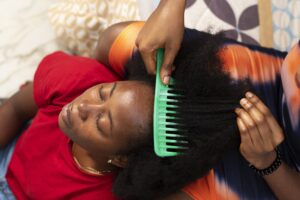
You moisturise your hair. You oil your scalp. You deep condition. You try to be careful with your curls, yet somehow you still find broken strands everywhere.
On your comb. In the sink. On your clothes. Sometimes even on your pillow.
If this sounds familiar, your hair may not necessarily be “weak.” Sometimes, it’s the little things we do repeatedly that contribute to breakage without us realising it.
The good news? Once you identify them, many of these habits can be changed.
Here are five common mistakes that could be standing between you and healthier, stronger natural hair.
1. Detangling Too Roughly
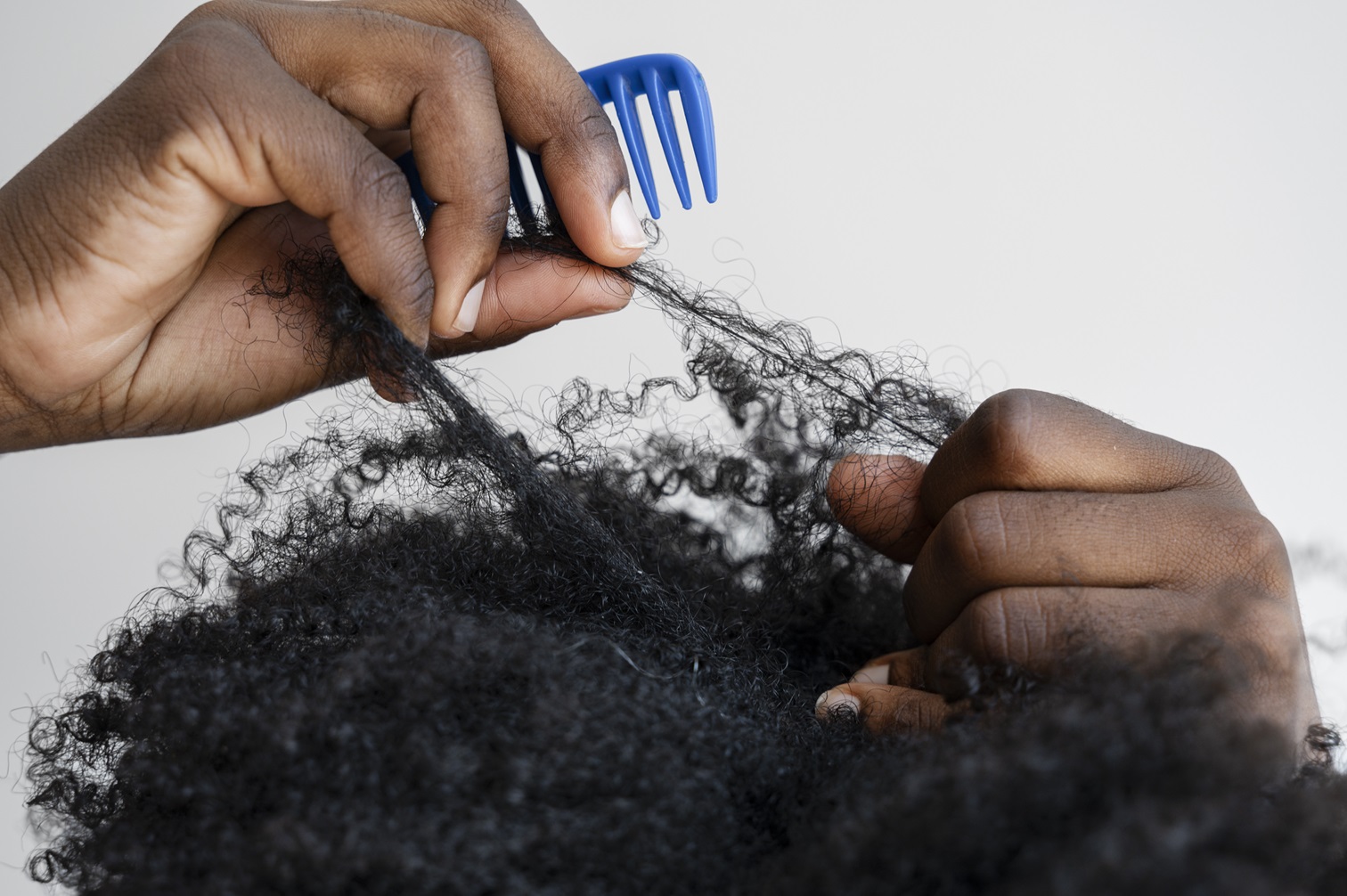
Natural hair and aggressive detangling are not friends.
Trying to rush through a tangled head of hair, especially when it is dry, can put unnecessary stress on the strands. Pulling through knots instead of gently working them out can cause strands to snap before you even realise what’s happening.
The solution isn’t to avoid detangling altogether. It’s to make the process gentler.
Work in manageable sections, use a product that provides enough slip, and start from the ends before gradually working your way towards the roots.
And please, don’t wait until your hair is one giant knot before you decide it’s time to detangle.
2. Keeping Your Hair Dry for Too Long
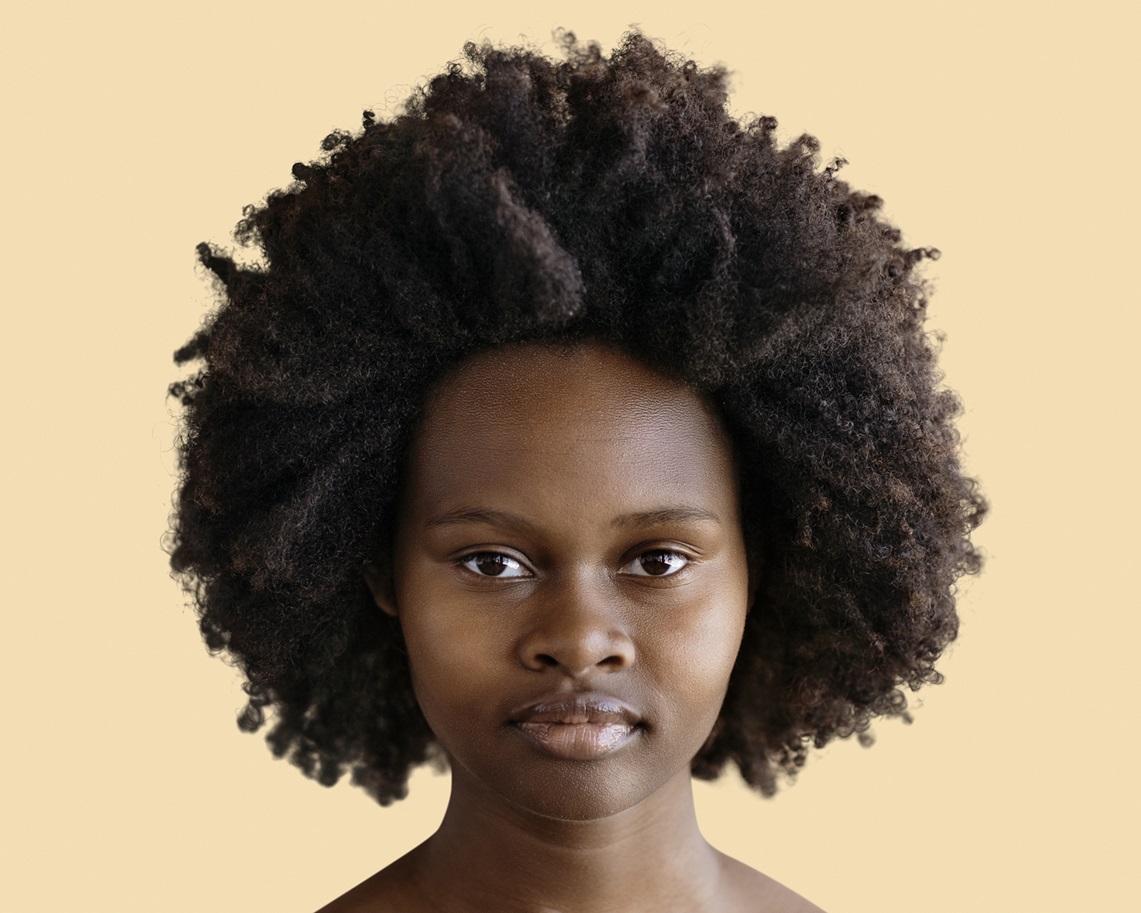
Natural hair needs moisture, and consistently dry hair can become more vulnerable to breakage.
This doesn’t mean your hair needs to be drenched in products every day. In fact, constantly piling products onto your hair can create another problem: buildup.
The goal is to find a moisture routine that works for your hair and lifestyle.
Pay attention to how your hair feels. If it frequently feels rough, brittle, or difficult to manipulate, it may be time to reassess your moisture routine.
3. Too Much Manipulation
Sometimes, we simply don’t leave our hair alone.
Combing it today. Restyling it tomorrow. Brushing it again the next day. Taking it down and immediately putting it into another style.
All that handling adds up.
Every time you manipulate your hair, particularly when you’re pulling, brushing, or combing, you create mechanical stress on the strands.
Low-manipulation styles can be useful because they reduce how often you need to handle your hair. But even with protective styles, remember that your hair still needs proper care underneath.
4. Wearing Tight Styles
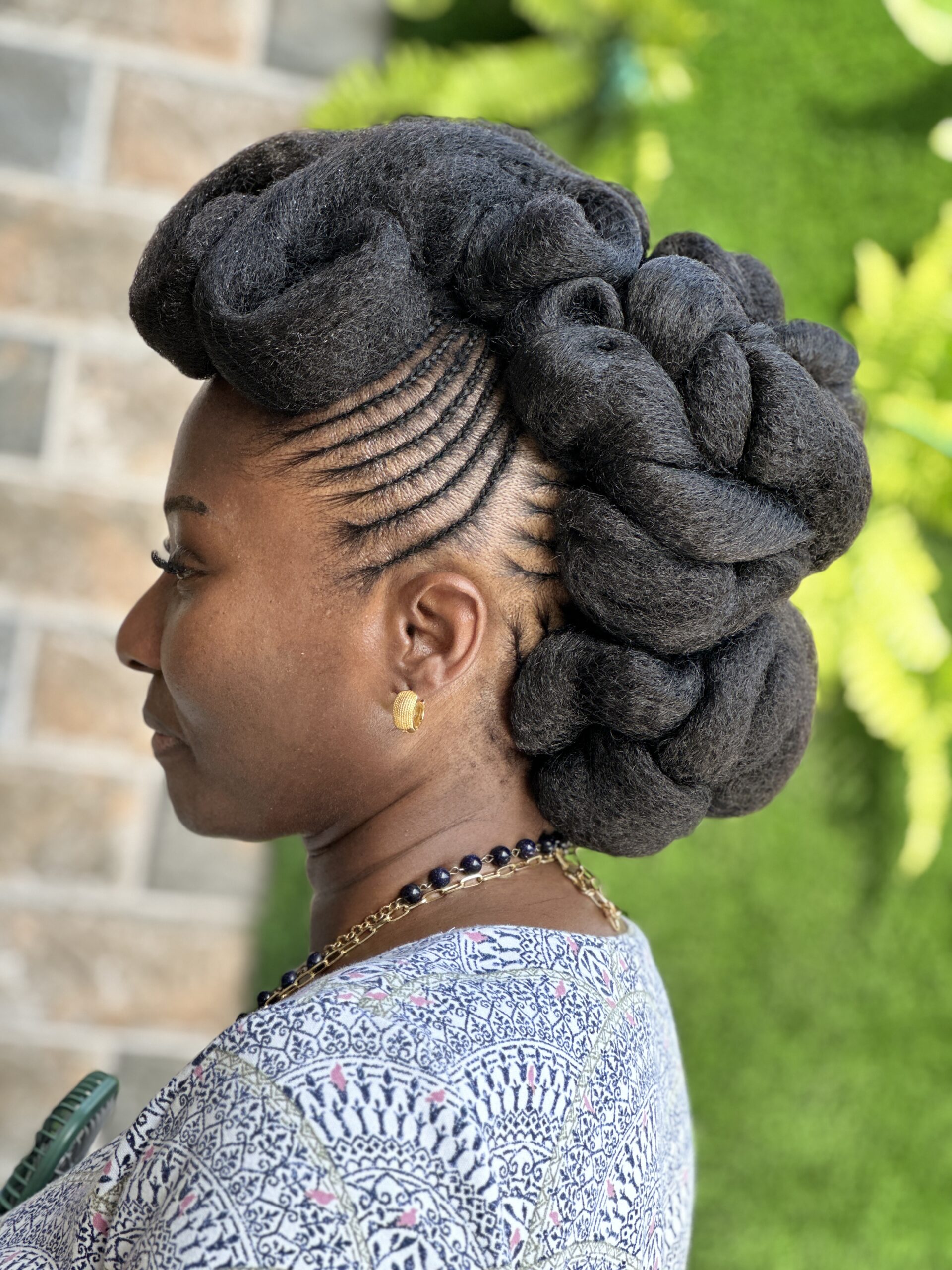
A style can look beautiful and still be too stressful for your hair.
If your braids, twists, cornrows, ponytail, or other style is constantly pulling at your scalp, your hairline and roots may be taking more tension than they can handle.
Pain is not proof that a hairstyle is “laid.”
If your scalp hurts, your edges are being pulled excessively, or you develop bumps around your hairline, the style needs attention.
Protective styling should protect your hair, not put it under unnecessary tension.
5. Ignoring Your Ends
Your ends are the oldest part of your hair, which means they’ve experienced the most manipulation and environmental exposure.
They deserve attention.
When the ends become excessively dry, split, thin, or damaged, they are more likely to break. Ignoring them because you’re trying to “hold on to every inch” can sometimes result in losing even more length over time.
Regularly checking the condition of your ends and maintaining them when necessary can help you retain more of your length.
So, Is Your Hair Actually Not Growing?
Sometimes what looks like slow growth is actually a length-retention problem.
Your hair may be growing from the scalp, but if you’re constantly losing those new inches to breakage, it can feel like your hair isn’t making progress.
Instead of asking only, “What can I use to make my hair grow?”
Ask yourself:
What can I change to help me keep the hair I already have?
That shift in mindset can make a big difference.
Healthy natural hair isn’t about having a perfect routine or owning every product on the shelf. It’s about understanding your hair, treating it gently, keeping it properly cared for, and being consistent.
So the next time you notice more breakage than usual, don’t immediately panic or start shopping for another miracle product.
Take a closer look at your habits first.
Your hair might be telling you exactly what it needs.
